Thursday, June 23, 2011

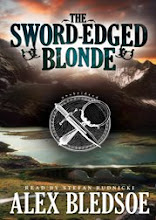
Just in: cover art for The Hum and the Shiver


Here's the final cover art for my next novel, out this September. The preliminary illustration used on Amazon featured a male figure, but since the book's protagonist is a young woman, Tor's awesome art deparment redid it.

What do you think?

Monday, June 20, 2011

Advice to writers: swing for the fence

Sometimes I get asked for advice about being a writer.* Usually it's a general question such as, "How can I become a writer?" or "What should I write about?" The answer to the first is easy: you either are or you aren't, and deep down you know. But that second question is a tricky one. Conventional wisdom says "write what you know," but since I know nothing about being a sword jockey in a mythological world or a vampire in 1975 Memphis, I can't really get behind that answer. But I do have an answer. Sort of.

In the liner notes for his 1995 Greatest Hits compilation, Bruce Springsteen calls the song "Born to Run":

"My shot at the title. A 24 yr. old kid aimin' at 'the greatest rock 'n roll record ever.'"

In a 2003 interview, he elaborated:

"With that one I was shooting for the moon. I said, 'I don't want to make a good record, I want to make The Greatest Record Somebody's Ever Heard.' I was filled with arrogance and thought, I can do that, y'know?"

When I was a kid, the cliche was that anyone who wanted to be a writer presumably also wanted to write The Great American Novel. I never knew what that was exactly, but I assumed it was some sort of book that encapsulated the American experience in such a universal way that anyone who read it would immediately connect with it. There were contenders presented in English classes: The Grapes of Wrath and The Adventures of Huckleberry Finn were the two most common. But neither connected with me. Either I was un-American, or the definition was essentially meaningless. Which it was, and is.

But it serves a purpose. Like "the greatest rock 'n roll record ever," it's a goal that we should have the arrogance to shoot for. Yet we don't. If anything, we're taught not to attempt it.

What passes for "serious" literature nowadays is often the result of multiple generations of writers going through MFA programs, publishing first novels of thinly-disguised coming-of-age autobiography, returning to academia as teachers and showing the next generation how to write and publish first novels of thinly-disguised coming-of-age autobiography. It's a recipe for institutionalized boredom that goes a long way toward explaining why you don't see so many bookstores anymore (and explains why something like David Foster Wallace'sThe Pale King, a novel literally about boredom, can gain such critical acclaim). The Great American Novel will never be produced by someone whose entire life consists of such limited experience.

Genre fiction, at least, is still popular (and believe me, I'm hugely grateful for that), but will never overcome the stigma attached to it (after all, it's "merely" science fiction, fantasy, mystery, etc.). And that's okay: we'll be happily serving our readers while the rest of the literary world wonders why no one reads anymore.

So where will the Great American Novel come from, then?

Beats me, but I do know one thing about it.

It will come from someone with the arrogance to shoot for the title.

So take your shot, man. Have the arrogance. Swing for the fence.

That's my advice.

*and that's especially funny since I've been writing all my life and my first novel didn't come out until I was over forty. Perhaps they'd be better served asking one of those hot young things with a best-seller at 25. But hey, people do ask me.

Tuesday, June 14, 2011

Eddie LaCrosse IV has a title!

At last! I'm proud to announce the title of the fourth adventure of Eddie LaCrosse, out in 2012 from Tor Books:

WAKE OF THE BLOODY ANGEL.

What do you think?

Monday, June 13, 2011

Kurosawa meets Eddie LaCrosse

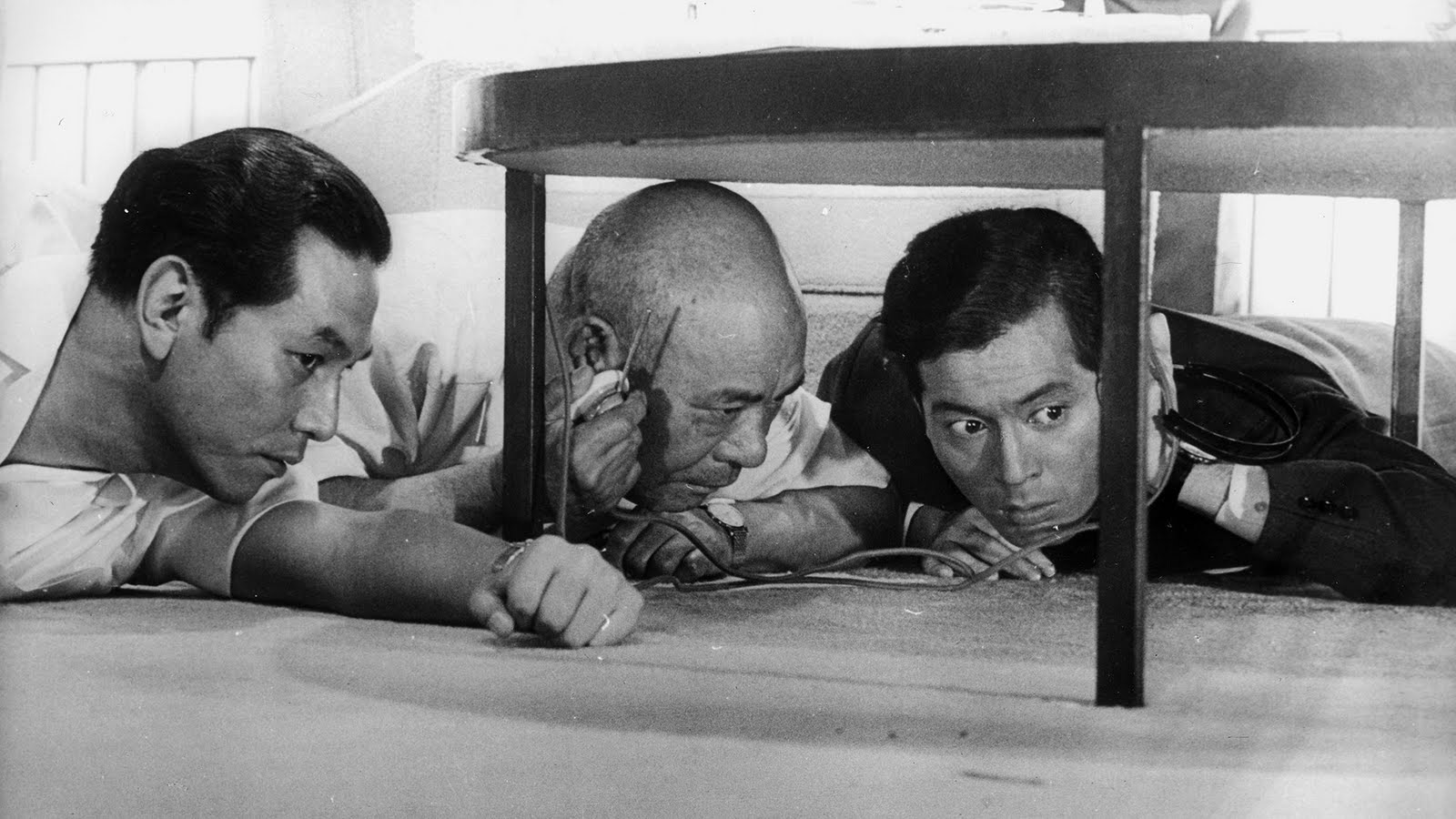
Quite a while ago, I posted the trailer to Akira Kurosawa's crime thriller High and Low, and mentioned it was one of the influences on my novel Dark Jenny. I never got around to explaining that until now.

High and Low is based on one of Ed McBain's "87th Precinct" series of police procedurals, in this case King's Ransom. And although the film changes many of the details of plot and setting to make it work in postwar Japan, the central dilemma remains the same. A wealthy businessman is sent a ransom note saying his son has been kidnapped, but it's actually the son of his chauffer, taken by mistake. Does he pay the ransom anyway, even if it means financial and professional ruin?

But it wasn't the plot of High and Low that influenced my novel, it was its structure. The first hour of the film takes place in the businessman's apartment, mostly in the living room that overlooks greater Tokyo, making it the "high" of the title. The claustrophobia adds to the tension, as Kurosawa invokes the sense of evil forces watching from below in the labyrinthine streets. The police must crawl on the floor to avoid being seen at the windows, and each time the phone rings everyone stops dead.


I wanted some of that same vibe in my scenes at Nodlon Castle, which occupy the first fourteen chapters of Dark Jenny. I tried keeping everything in the great hall, but since I'm not Kurosawa, I wasn't quite able to make it work. Still, I hope I conveyed some of the sense of cabin fever, of Eddie trapped within stone walls and ceilings, unable to do much of anything except wait and hope for a break.

SPOILER ALERT! Both for my book and Kurosawa's film!

Once the ransom has been paid, the police are free to use all means at their disposal to track down the kidnappers. The film then turns into a documentary-style chase through the city's rougher sections, the "Low" of the title. It's as different from the spacious, sparsely-furnished apartment as it's possible to be: "a sordid sin-market filled with mixed-race couples and manic frugging, squabbling sailors and cat-eyed slatterns, ravaged junk-zombies and undercover cops from Hell," according to the DVD liner notes by Chuck Stephens.


Similarly, when Eddie is finally allowed to leave, he travels across the breadth of the island of Grand Bruan, visiting towns, villages and manor houses all very different from Nodlon Castle. I wanted to get the sense of freedom and relief Eddie feels at finally being allowed to do something, the same way Detective Tokura and his men do in the Kurosawa film.

Part of the fun of writing any Eddie LaCrosse story is finding a way to use influences that are about as far from sword and sorcery as you can get, so working in elements of a sixties Japanese crime thriller appealed to me immensely. It also provided a structure for my faux-Arthurian story that let me deal both with court intrigue and full-on battles without bogging down in either. Without it, Dark Jenny would not have been as lean and fast-paced as I hope it turned out to be.

Tuesday, June 7, 2011

Blinded by the Dark: chiaroscuro and Eddie LaCrosse

Recently a reviewer was kind enough to say this about my latest novel:

"Dark Jenny is a fast-paced mystery with plenty of action; it’s also intelligent, original, and satisfyingly chiaroscuro."

You don't encounter the word "chiaroscuro" every day, and several readers asked me what it meant. Quoting from Webster, it's a "pictorial representation in terms of light and shade without regard to color." In other words, it's the use of darkness to let you see the light, and vice versa.

I first encountered the term with regards to one of my favorite genres, film noir. It's a great example of turning a flaw into an asset. Many of these movies were shot on very low budgets, which often meant cheap sets. To disguise this, the cinematographers would keep the sets dark, so that their flaws were hidden. Many of these same cinematographers, and the directors they worked for, were also expatriates from Nazi Germany, which meant they learned their craft during the Weimer Republic days of the great Expressionist films like M, Nosferatu, Metropolis and The Golem. This meant that not only did they know how to light for darkness, so to speak, but they knew why.


Peter Lorre in M. The film is actually shot in this weird vertical aspect ratio.

Chiaroscuro thrived in black and white film noir. Witness the use of shadows during the fist fight in Out of the Past, or the scene between Jonesy and Canino in The Big Sleep with only their dark silhouettes on the frosted glass. Watch the way Mike Mazurki appears behind Dick Powell in Murder, My Sweet. You could spend the day listing scenes that apply.


Dick Powell and Mike Mazuski in Murder, My Sweet.

So how does such a visual term translate to prose, specifically to the world of Eddie LaCrosse? It's a modification of the "innocent abroad" trope, in which the moral status of various characters (i.e., their shades of darkness) are made plain against the spiritual and moral purity of the innocent main character. Treasure Island, for example, uses the boy Jim Hawkins as the moral yardstick against which all the other characters are measured.

But in crime and mystery, it goes a step further, in that it allows the reader to interpret not just the people but the world. Raymond Chandler famously said of his genre, "Down these mean streets a man must go who is not himself mean, who is neither tarnished nor afraid." In other words, he is the light going down the streets of darkness (no Biblical reference intended).


Harrison Ford and Sean Young in Blade Runner, which transposes chiaroscuro to the future.

That's how I see Eddie, and how I hope he's used in the stories. He's not mean in the sense Chandler uses the word (both vicious and ignoble), but he has been in the past, and he knows how easy it is to cross that line. He's tarnished, certainly, but he's in the process of polishing that away. And he's not afraid of the walk, although he has sense enough to be scared of what might live in the shadows he passes through.

Without his light, we could never see what dwells in the shadows. And without the shadows, we'd never know the value of the light, of the hero, of our guy Eddie. And that's how chiaroscuro fits into the world of Eddie LaCrosse.

Monday, June 6, 2011

Win an ARC of THE HUM AND THE SHIVER

Curious about my next book, The Hum and the Shiver? Here's your chance to check it out before it hits shelves. I have five advance reader copies; leave a comment on this blog post before midnight Sunday, June 12 for chance to win one. Be sure and leave an e-mail with your comment.

Here's the video teaser trailer to wet your whistle:

Monday, May 30, 2011

The "Don't Say Gay" bill and being "tender-hearted" in TN


So Tennessee, my home state and the setting of many of my stories and novels, has again made the national news. The State Senate passed a law dubbed the "Don't Say Gay" bill which outlaws even mentioning the existence of gay people in elementary and middle school. I doubt this also includes not mentioning the various slurs and code words Tennesseans have always used for gay folks; in fact, I'm sure the sponsors of the bill often employed those terms in closed-door meetings prior to presenting the bill, right after the opening prayer.

As a child with little aptitude in sports and an interest in literature, science fiction and movies, my schoolmates often teased me with those same slurs. A cousin, in fact, once taunted me with some of them for reading Star Trek: Log Five, just before he beat me up. The fact that I wasn't gay didn't particularly matter, as it never does in such situations. But it was, and remains, the way kids often are, and while I disapprove of it I also comprehend the reasons for it, especially in the South.


Still, it was nothing compared to the contempt adults showed for kids they deemed "different," "odd" or "weird," and that included a term of such surpassing brilliance that I still marvel at it: tender-hearted. It sounds almost like a compliment, much as does "Bless your heart," which is now generally known to be Southern code for, "You're so stupid." In the same way, "tender-hearted" is code for "gay." Or more precisely, it's synonymous with one of the pithier terms used to derisively describe gay males.

The first time I cursed (we called it "cussed") in front of other people got the term "tender-hearted" applied to me. When I was about ten or eleven, some older good ol' boys dragged a turtle from a pond and cut off its head in their driveway for no reason other than to do it. I told them I found it ignorant and cruel, and when they laughed at me for that, I let fly with every curse word I knew. I was also so mad I started crying. Between the tears and the general knowledge that I liked to read books, I was quickly pegged as "tender-hearted," and to this day (nearly forty years later) the people in my home town still think of me that way.

So the "Don't Say Gay" bill disappoints and saddens me, but it doesn't surprise me. Good ol' Tennesseans have a long tradition of not saying "gay." Instead, depending on the situation, they either use slurs or euphemisms, as they do for everything else. Bless their hearts.


(Please visit and support It's Okay to be Takei, George "Mr. Sulu" Takei's brilliant response to the Tennessee law.)